
Https://mikron-plzen.cz/ — complete guide
October 5, 2026Coach Tote Bag Authenticity Tips What Sets It Apart
October 5, 2026Coach Explained: Your Complete 2026 Brand Guide
In 2026, Coach, a household American fashion label, is enjoying vigorous sales growth. The brand first opened as a small leather workshop, became a handbag specialist and now sells clothing, shoes and accessories in stores worldwide. Its core idea has held firm for decades: well-crafted leather goods priced below the traditional European luxury houses. In the view of a federal court, that space is accessible luxury, different from mass-market fashion as well as true luxury.
In this guide you will find where Coach came from, who holds and runs it now, how large the business has become and what goes into its range. As the difference between a full-price coach store and a coach outlet regularly leads to confusion, it explains that too. Every figure is dated to its source, while all prices reflect observed market prices, not an official price list.
How a Manhattan Leather Workshop Became an American Label
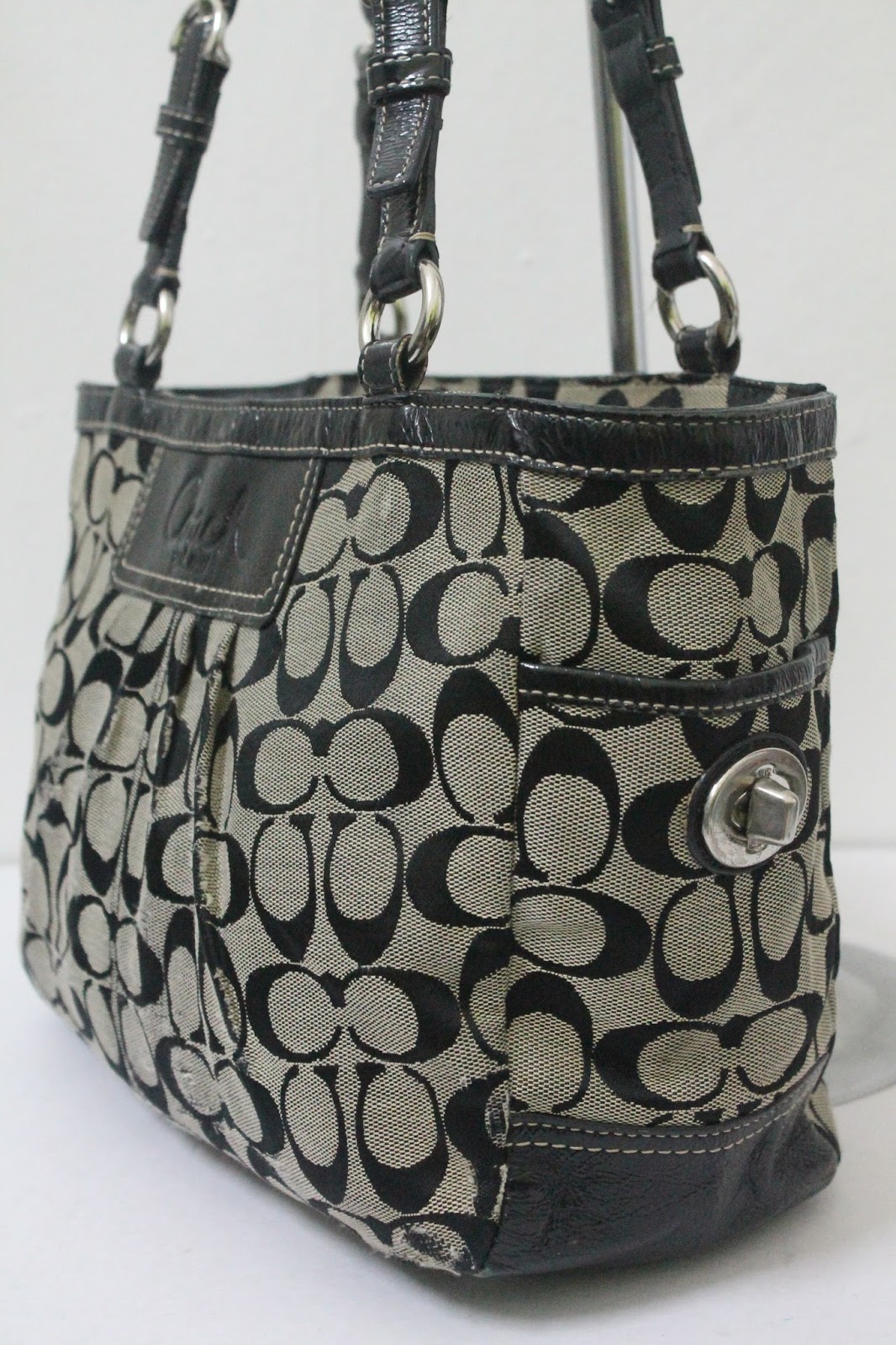
In 1941, a tiny family-run leather workshop was established in Manhattan, and it is to that workshop that Coach traces its roots. In Coach’s own telling, six artisans worked in a loft on 34th Street, making wallets, billfolds and other small leather goods aimed at men. Bags for women arrived later, along with the Coach name, dating to about 1960 or 1961. The original owners of the workshop were not Miles and Lillian Cahn, even though the couple is sometimes mistakenly described that way.
Miles and Lillian Cahn became part of the business in 1946, and by around 1950 Miles was overseeing the factory. The couple acquired the business from its original owners in 1961, gaining control of the company. Lillian Cahn is reported to have suggested adding women’s handbags, a move that transformed the company. The leather finish called glovetanned leather, inspired by the way a worn baseball glove softens with use, has been credited to Miles Cahn.
The Era When Bonnie Cashin Shaped Coach
Bonnie Cashin, Coach’s first lead designer, is the designer most strongly associated with the early years of Coach. Reportedly, she worked as a contracted designer rather than as an employee, and she was not a co-founder. Her start date is a small puzzle, because Coach’s own pages give coach bags outlet it as both 1961 and 1962. Her exit is not in doubt: she left Coach in 1974.
As Coach tells it, the toggle on the top of her convertible prompted the brass turnlock closure she unveiled in 1964. Side pockets, coin-purse details and brighter colors are also attributed to her, and together they relaxed the brand’s look. Today, the turnlock remains one of the best-known Coach details, and it appears on bags such as the Cassie crossbody.
Changing Owners, Going Public and the Creation of Tapestry
Coach was acquired by Sara Lee Corporation in July 1985. In October 2000 the company went public, and then, the following year, Sara Lee is said to have completely exited. Coach’s Signature collection, with the “C” monogram, arrived in 2001, which means the pattern is a recent addition rather than a mid-century heritage motif. The corporation, Coach, Inc., was renamed Tapestry, Inc. on 31 October 2017, and its ticker symbol switched from COH to TPR.
Only the parent company took on a new name, while the Coach brand, its stores and its products kept their names. The Stuart Weitzman shoe label, bought by Coach, Inc. in 2015, passed from Tapestry to Caleres in a deal that closed on 4 August 2025. As of 2026, Tapestry’s stable includes only two brands, Coach and Kate Spade, with Coach by far the more substantial of the two.
How the Capri Deal Never Closed
Tapestry announced on 10 August 2023 that it had reached an agreement to purchase Capri Holdings, owner of Michael Kors, Versace and Jimmy Choo. In April 2024 the Federal Trade Commission challenged the deal, seeking a preliminary injunction from a federal court to block it. On 24 October 2024, a federal judge in the Southern District of New York issued that preliminary injunction. The decision did not settle the merits, yet it prevented the companies from closing the acquisition while the challenge went on.
The court’s decision acknowledged that an accessible luxury handbag market exists, separate from both mass-market bags and true luxury. Tapestry and Capri ended their agreement on 14 November 2024, saying the legal process was unlikely to be completed before their February 2025 deadline. The takeover was never finalized, which means Michael Kors, Versace and Jimmy Choo are not part of Tapestry.
Who Leads Coach These Days
The parent company, Tapestry, is headed by chief executive Joanne Crevoiserat. Serving as Coach’s CEO and brand president, Todd Kahn runs the brand itself; he assumed the post on an interim basis in July 2020 and held it permanently from April 2021. Creative leadership belongs to Stuart Vevers, whose appointment was made public in June 2013.
His first Coach collection was reportedly shown in February 2014, and he is still in place as Coach’s creative director in 2026. Reports say he had a spell at Mulberry and later became creative director at Loewe before joining Coach. Under his direction, Coach has mined its archive, reissuing older designs and reworking vintage shapes into new bags such as the Tabby. The Cunard Building, in New York, was the setting for his Fall 2026 collection on 11 February 2026.
Coach in Numbers
To see how big Coach has become, turn to Tapestry’s annual report for the fiscal year ended 27 June 2026. Coach’s net sales rose 24% on the prior year to $6,914.7 million, whereas Tapestry as a whole posted $8,004.2 million. Coach, put simply, was responsible for about 86% of group sales.
At the end of that fiscal year Coach had 973 directly operated stores, with 336 in North America and 637 outside North America. Some sources cite about 1,299 stores, but this count includes every store across Tapestry, not Coach alone. Tapestry further noted that the average unit retail price of Coach handbags increased at a mid-teens percentage rate across the year. The company has linked that rise partly to reduced promotional activity.
| Metric | Figure | Timeframe |
|---|---|---|
| Net sales, Coach | $6,914.7 million, a 24% rise | Fiscal year 2026 |
| Tapestry net sales | $8,004.2 million | Fiscal 2026 |
| Coach stores under direct operation | 973 | As of the end of fiscal 2026 |
| Of these, North America | 336 | Close of fiscal 2026 |
| Of which international | 637 | Close of fiscal 2026 |
| Brands in the Tapestry portfolio | Coach and Kate Spade only | 2026 |
The Coach Range: Handbags, Clothing and Footwear
Handbags are still at the core of the business, with coach handbags today combining structured icon styles with soft, slouchy leather. The Tabby, based on a 1970s archive shape, launched in 2019; the Rogue first appeared in 2016 and returned in 2021; and the Brooklyn, a relaxed coach shoulder bag, arrived in August 2024. The Empire Carryall was presented on the Fall 2024 runway and put on sale in February 2025. The Kisslock Frame Bag, said to be the opening look of the Fall 2026 show, was observed at $350, while a Rogue 25 in alligator was seen at $8,000, the highest bag price observed. As the Coach Originals line remakes archive designs as new bags, the bags are new reissues rather than vintage.
Varsity jackets made in leather and in leather with wool, a first all-shearling varsity jacket for the brand, peacoats and suede coats all appeared in coach clothing for Fall 2026, a sign that ready-to-wear is now a serious part of the offer. The same show also included blazers, flared trousers, A-line skirts, floor-length high-collar dresses and all-gender jacquard knits. Footwear includes sneakers such as the Soho Sneaker and the laceless Skate Sneaker, and fashion press spotted loafers, clogs, booties and sandals for fall. Coach also runs Coach (Re)Loved, launched in 2021 and reported to include trade-ins, restored bags and upcycled pieces, plus Coachtopia, a circular-design sub-brand launched on 20 April 2023.
Where to Shop: Coach Store, Coach Outlet and Online
The largest flagships carry the Coach House name, and every full-price coach store stocks the current collections. Another Coach House, at 645 Fifth Avenue, has been reported as targeted for 2027, years after the New York Coach House on Fifth Avenue, which reportedly opened in 2016. Harrods, Selfridges and John Lewis sell the brand in the UK, where London’s Coach House on Regent Street similarly opened in 2016. Anyone looking for a structured coach bag, a coach tote bag or a new jacket in the latest season’s styles should look in the full-price range.
Both outlet stores and the official online outlet section on Coach’s own website make up Coach Outlet, an official channel run by Coach itself. Product made for the outlet channel was put at around 85% of outlet goods in a 2014 quote from Coach’s head of investor relations, a figure that is now dated, and Tapestry has since discussed bringing some full-price product into outlets. The public evidence does not back up claims that outlet bags are invariably worse, or exactly the same as boutique bags. Bicester Village, Cheshire Oaks and Ashford Designer Outlet are among the UK outlet store locations. Searches for the brand are sometimes typed as “couch” or “cosch”; before buying, check that any site promising big discounts is really Coach’s own website or a known retailer.
